
When designing content, we often put much more emphasis on how we teach the content than on how the learners will best understand and retain the content. Too often, the principles behind the science of learning take a backseat to the technology used in delivering the training. This approach frequently relies on technology-based solutions rather than instructional strategies rooted in research.
A shift in focus is needed: First, understand how the learners will best learn and retain the content, and then determine the best way to deliver it. This article will focus on two powerful, underutilized techniques to make learning stick and improve performance. It will also discuss the importance of senior leadership support for these innovative approaches to improve individual and organizational success.
The Science of Learning: Spaced Repetition
Exposing learners to content once and then returning them to work doesn’t lead to long-term retention or application of the new content and skills. And yet, this is still a common approach to training. We can and must do better.
Dr. Hermann Ebbinghaus was a German psychologist who studied memory in the late 1800s and early 1900s. His research led to three main conclusions that are commonly known as the learning curve, the forgetting curve and the spacing effect. These findings highlight that people learn best when exposed to content repeatedly over time, with periodic reinforcement. Without spaced reinforcement, learners slide back down the forgetting curve to their previous levels of performance.
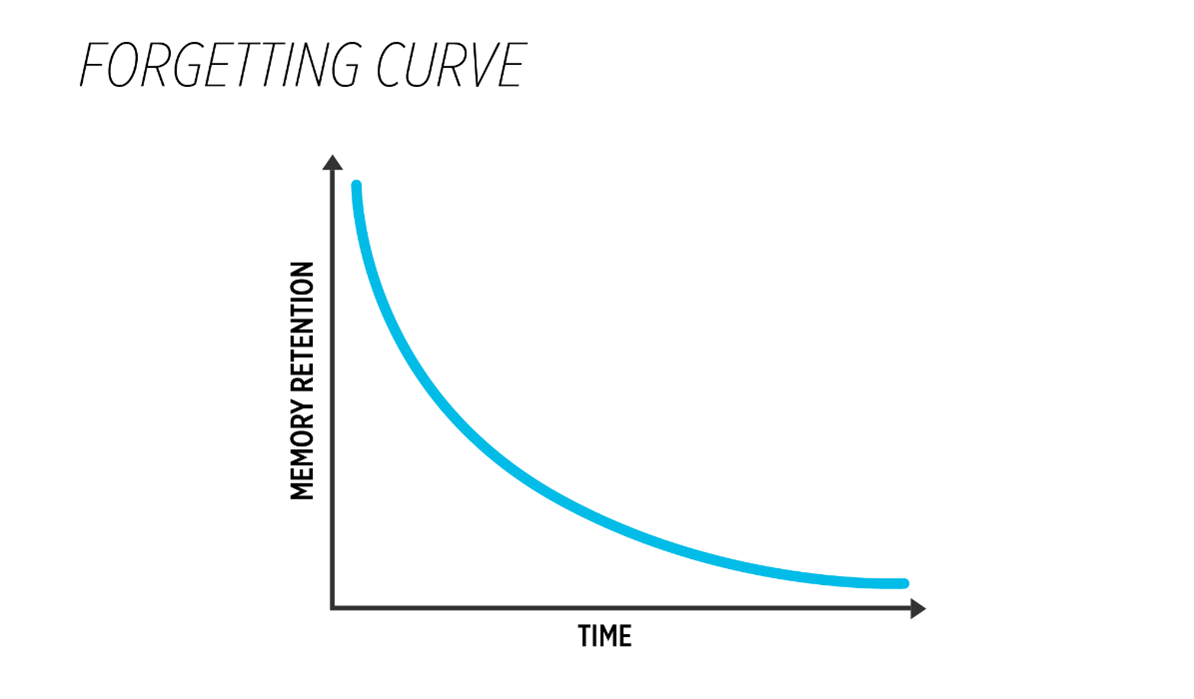
This is where technology can be a major asset. There are almost limitless options, both high tech and low tech, to consider when looking for ways to reinforce prior learning.
- Microlearning videos: Short follow-up videos with embedded quizzes can reinforce key concepts.
- Peer coaching: Partnering learners for periodic peer observations encourages feedback and performance improvement.
- Gamified reinforcement: Digital learning apps that prompt learners to review material at spaced intervals enhance retention.
Regardless of the method used, learning must be extended beyond the classroom for any real long-term learning retention and performance improvement. The options for extending the classroom are only limited by creativity—and, of course, budgets.
Deliberate Practice: The Key to Expert Performance
A great approach to extending the classroom through spaced repetition and continuing to build better performance is through the application of what is known as “deliberate practice.” The concept, developed through the research of Dr. Anders Ericsson, emphasizes focused, intentional practice that leads to expert-level performance.
Contrary to popular belief, expert performance is not achieved through a set number of practice hours (e.g., Malcolm Gladwell’s “10,000-hour rule”). Instead, how practice is conducted is more critical than the time spent. Deliberate practice requires:
- Goal-oriented skill development: Each practice session should focus on specific performance improvements.
- Timely and frequent feedback: Learners need continuous feedback from coaches, mentors, or peers.
- Challenging and engaging tasks: Practice should push learners beyond their comfort zones.
- Repetition with variation: Consistent practice of skills with slight modifications helps refine performance.
Chess players do not get to be Grand Masters by casually playing chess for hours and hours. Okay, so you might be thinking, “I’m not trying to develop Grand Master level managers; I’m just trying to get my managers to do a great job of coaching their employees!”. The good news is that you get to determine what “expert performance” looks like in your organization, and you can get your managers to where they need to be through spaced repetition that includes the elements of deliberate practice.
Leadership Support: The Key to Implementation
Even the best training will fail if it doesn’t have leadership support. This innovative approach will thrive only if senior managers fully understand the value to the organization and support the new activities and actions to make it work. Before launching new training initiatives, assess leadership’s perspective on:
- The importance of spaced reinforcement and deliberate practice in skill development.
- Cultural openness to continuous learning within the organization.
- Willingness to invest in training beyond the traditional classroom model.
If the current culture and leadership point of view is very supportive, then move full speed ahead. If you anticipate skepticism or flat-out resistance, consider piloting small-scale implementations to demonstrate the benefits before scaling. Leadership buy-in ensures sustained training efforts, maximizing impact on both individual and organizational performance.
Final Thoughts
Focusing on how learners best absorb content—rather than simply how it is delivered—transforms training effectiveness. Implementing spaced repetition and deliberate practice ensures long-term knowledge retention and skill mastery. However, these strategies require strong leadership support to drive adoption and maximize performance gains.
By shifting the focus from training delivery to learner retention, organizations can create sustainable, high-impact learning experiences that drive both individual and business success.